

U.S. flight cancellations and delays are once again making headlines in April 2026, as thousands of passengers were left stranded at some of the busiest airports across the country. On April 13, 2026, a wave of airline flight cancellations and delays swept through major hubs including Chicago O’Hare, Miami International, and San Francisco International Airport — turning what should have been routine Monday travel into a frustrating, exhausting ordeal for tens of thousands of flyers.u.s. flight cancellations delays
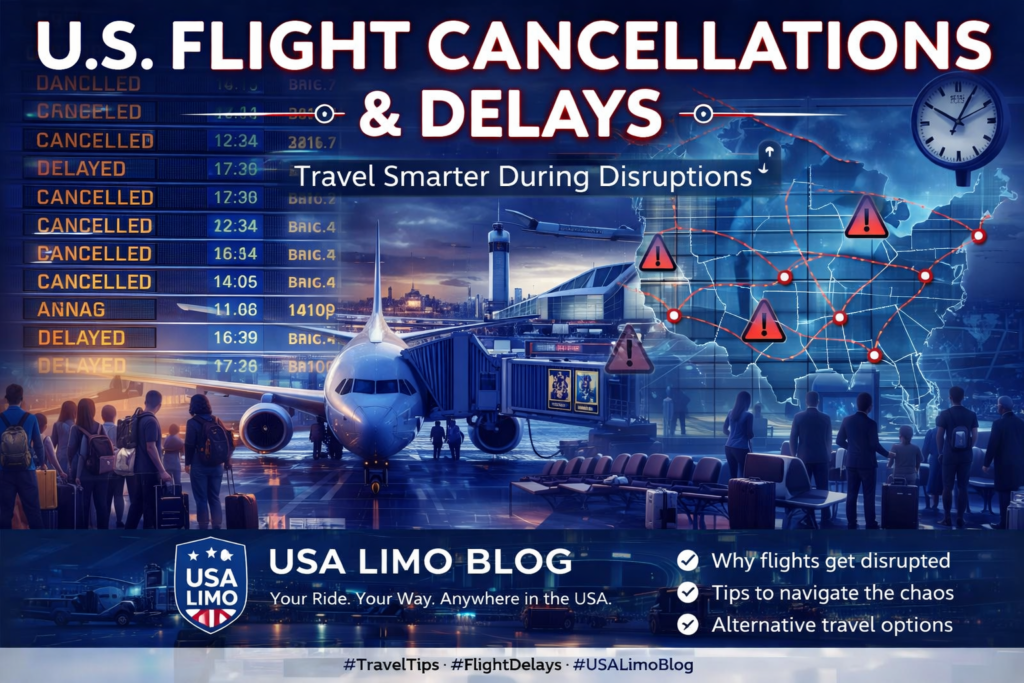
If you are trying to figure out the latest on us flight cancellations delays today, or you are planning a trip and wondering what to do if your flight is affected, this guide breaks down exactly what happened, why it happened, and — most importantly — what your smartest alternative is when airline travel fails you.
What Happened: A Snapshot of the April 13 Travel Disruption
According to data reported on April 13, 2026, at least 55 cancellations and 2,345 delays were recorded across the United States in a single day. That is not a minor hiccup — that is a nationwide breakdown affecting real people with real plans: business meetings, weddings, reunions, and vacations all thrown into uncertainty in a matter of hours.
Chicago O’Hare International Airport led the country in total disruptions, topping the list for the highest number of delayed and cancelled flights on that date. Miami International and San Francisco International were not far behind. Even smaller regional airports — including Billings Logan International in Montana — reported unexpected grounded flights, showing just how far-reaching this wave of flight cancellation and delay truly was.
Among the major U.S. carriers, American Airlines reported the most delays among the so-called “Big Four” airlines — American, Delta, United, and Southwest. For American Airlines passengers in particular, the day brought wave after wave of rescheduled departures and last-minute gate changes.
Why Are U.S. Flight Cancellations and Delays Getting Worse?
This is not the first time we have seen a mass disruption event like this, and aviation analysts are warning it will not be the last. The reasons behind the April 13 chaos are the same systemic issues that have been plaguing U.S. air travel for years — and they are getting harder to ignore.
1. Severe Weather Patterns
Spring weather across the United States is notoriously unpredictable. Storms in the Midwest can cascade into delays all along the East Coast. A weather event at Chicago O’Hare — one of the most connected hub airports in the world — does not just affect Chicago travelers. It sends a ripple of airline flight cancellations down the entire system, grounding flights from New York to Los Angeles that have nothing to do with the storm itself.
2. Staffing Shortages Across the Industry
The aviation industry has still not fully recovered from the staffing crisis that began during the pandemic. Airlines, air traffic control facilities, and ground crews are all operating with leaner teams than optimal. The FAA itself has been under scrutiny for understaffed air traffic control towers at key facilities. When bad weather hits a system already stretched thin, the result is exactly what we saw on April 13: mass us flight cancellations delays with no quick fix in sight.
Industry experts have noted that the system is struggling under the combined pressure of staffing shortages and unpredictable weather — and that greater investment in aviation infrastructure is long overdue. The FAA stepped in on April 13 to implement flow control measures at several key points to try to reduce airspace congestion, but the damage to passenger schedules was already done by the time those measures took effect.
3. The Domino Effect of Hub Airport Delays
Modern air travel is built on a hub-and-spoke model. When a major hub like O’Hare goes down, the ripple effects travel outward to hundreds of spoke airports across the country. A flight from JFK to Los Angeles may be delayed not because of anything happening in New York or California, but because the connecting crew was stuck in Chicago. This is why a flight cancellation and delay at one airport can strand passengers thousands of miles away.
Which Airports Were Hit Hardest?
Here is a quick breakdown of the airports most affected by the April 13 wave of airline flight cancellations:
- Chicago O’Hare International Airport (ORD) — Most disrupted airport in the country on April 13. Hundreds of delays and multiple cancellations reported throughout the day.
- Miami International Airport (MIA) — High volume of stranded passengers, with delays affecting both domestic and international routes.
- San Francisco International Airport (SFO) — Significant delays, partly driven by fog and staffing challenges.
- Billings Logan International Airport (BIL) — Even this smaller regional hub saw a surprising number of grounded flights, showing the national reach of the disruption.
Passengers at these airports were advised to check their flight status online before heading to the terminal — smart advice that applies any time us flight cancellations delays today are being reported at scale.
Your Rights During a Flight Cancellation or Delay
Many travelers do not know what they are actually entitled to when a flight cancellation and delay happens. Here is a quick overview:
If Your Flight Is Cancelled
- You are entitled to a full refund if you choose not to travel on the rebooked flight, regardless of whether the cancellation was weather-related or the airline’s fault.
- The airline must rebook you on the next available flight at no extra charge.
- If the cancellation was within the airline’s control (mechanical issues, staffing), you may be entitled to meal vouchers, hotel accommodation, and ground transportation.
If Your Flight Is Significantly Delayed
- For delays of 3 hours or more within the airline’s control, most major U.S. carriers now offer meal credits and rebooking options under their Customer Service Plans.
- Always ask at the gate — many compensation options are not automatically offered and must be requested.
- Document everything: take photos of the departure board showing the delay, save all receipts for food and transportation.
For the most current federal rules on passenger rights during airline flight cancellations, visit the U.S. Department of Transportation’s official Fly Rights page.
Stranded at JFK, LaGuardia, or Newark? Here Is What Smart Travelers Do
If u.s. flight cancellations delays leave you stranded in the New York metro area — or if you need to get to the airport urgently because of a last-minute rebooking — the smartest move is to stop relying on unpredictable rideshare apps and book a dedicated private car service instead.
When flights are disrupted and thousands of passengers are scrambling, Uber and Lyft surge pricing skyrockets. Wait times balloon. Drivers cancel. Meanwhile, a pre-booked private car or limo service gives you a confirmed, professional driver waiting for you — regardless of what is happening at the airport.
If you need reliable transportation to or from JFK during a disruption, read our complete guide: Best Way to Get from JFK to Manhattan — Complete 2026 Travel Guide. It covers every option available, from subway to private car, with honest pricing for each.
Already booked with a car service from Connecticut or New Jersey and wondering how delays affect your pickup? Check out our guide on JFK Airport Limo Service to Connecticut — it explains exactly how professional car services handle flight tracking and adjusted pickup times so you are never left waiting.
For travelers asking whether rideshare is even an option at JFK during a busy travel disruption day, our article Are Ubers Allowed to Pick Up at JFK? gives you the full picture on airport rideshare rules.
How to Protect Your Travel Plans Going Forward
Given the growing frequency of us flight cancellations delays today and the instability of the current aviation system, here are five practical steps every traveler should take before their next flight:
1. Always Book the Earliest Flight of the Day
The first flight out is statistically the least likely to be delayed. Aircraft and crews start fresh. There are no upstream delays from earlier in the day to cascade into your departure. This single habit can dramatically reduce your exposure to airline flight cancellations and missed connections.
2. Check Flight Status the Night Before
Use tools like FlightAware or your airline’s own app to monitor your flight status starting the evening before your trip. Many cancellation decisions are made the night before, and knowing early gives you more options for rebooking.
3. Pre-Book Your Airport Transportation
Never assume a rideshare app will be available when you need it most. Pre-booked car services confirm your ride in advance, track your flight in real time, and adjust automatically when delays push your arrival time back. If you are traveling from Connecticut or New Jersey to JFK, this matters even more — read our Car Service from CT to JFK pricing guide to understand your options.
4. Travel with Minimal Checked Luggage
When flight cancellation and delay forces a rebooking, checked bags complicate everything. Carry-on only travel gives you the flexibility to jump on a different carrier or a different routing without waiting for bags to be transferred.
5. Purchase Travel Insurance
Given how common u.s. flight cancellations delays have become, travel insurance is no longer optional for frequent flyers. Look for a policy that covers trip interruption, accommodation, and alternate transportation costs.
The Bigger Picture: Is U.S. Air Travel Getting Worse?
Aviation analysts commenting on the April 13 disruption have been blunt: this wave of airline flight cancellations is a symptom of deeper systemic fragility. The air travel system, they say, needs greater investment — in infrastructure, in staffing pipelines, in modernizing air traffic control technology, and in resilience planning for extreme weather events that are becoming more common.
For ordinary travelers, the lesson is clear: build redundancy into every trip. Know your rights. Have a backup plan for ground transportation. And whenever possible, choose airlines with stronger on-time records and newer fleets.
The April 13 wave of us flight cancellations delays affected at least 55 cancelled flights and over 2,300 delayed departures in a single day. Those are not just statistics — they represent thousands of missed meetings, delayed honeymoons, and frustrated families waiting in airport terminals for hours on end.
Final Thoughts
U.s. flight cancellations delays are a growing reality of American air travel in 2026. Whether it is severe weather, staff shortages, FAA flow control measures, or the cascade effect through interconnected hub airports — the system is showing its cracks. As a traveler, the best you can do is stay informed, know your rights, book flexible transportation, and have a backup plan ready.
If your travels take you through New York — whether you are flying in or out of JFK, LaGuardia, or Newark — a reliable private car service is one of the smartest investments you can make. When airline chaos hits, the last thing you want is to be stranded at the curb wondering when your Uber is coming. A professional car service with real-time flight tracking gives you peace of mind that no app can match.
Stay safe, travel smart, and always have a plan B.
Have questions about transportation to JFK or any New York-area airport? Contact us or browse our full library of airport travel guides at USA Limo Blog.